 |
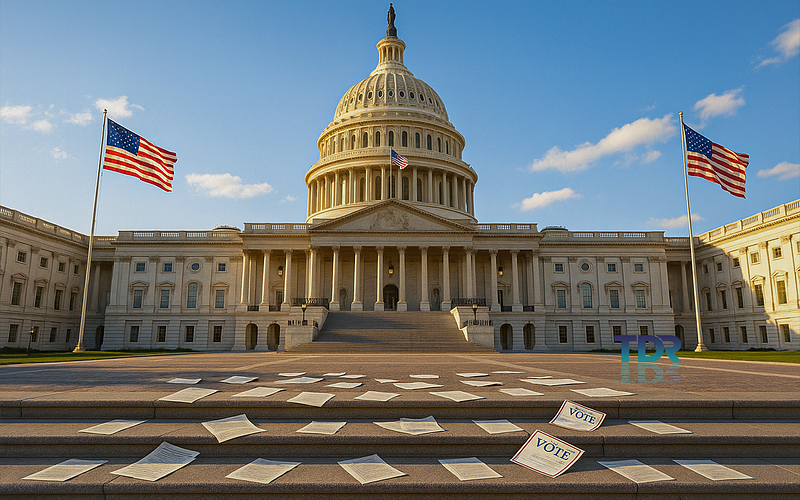
| The hallowed halls of democracy where history was made. On July 3, 2025, the US Capitol witnessed the passage of the $3.4 trillion ‘Big Beautiful Bill’ in a nail-biting 218–214 vote that will reshape American fiscal policy for generations. From marathon speeches to Independence Day signings, this is where political courage meets institutional power. |
The Big Beautiful Bill: How $3.4 Trillion Changed American Politics Forever
Inside the marathon legislative battle that reshaped America’s fiscal future on Independence Day Eve
At 11:47 PM on July 3, 2025, with fireworks already lighting up the sky across America, the House of Representatives delivered what may be the most consequential legislative victory of the Trump presidency. The $3.4 trillion “Big Beautiful Bill” passed by the narrowest of margins, 218 to 214, setting the stage for a July 4th signing ceremony that will transform this Independence Day into a political watershed moment.
But this wasn’t just another political win. This was a masterclass in legislative strategy, political theater, and the raw exercise of power that will echo through American politics for generations.
The Marathon That Captivated Washington
The final 24 hours before the vote resembled something between a political thriller and an endurance contest. House Democratic Leader Hakeem Jeffries took the floor at 3:02 AM on July 3rd and didn’t step down until 11:48 AM, delivering a record-breaking 8 hours and 46 minutes speech that instantly became the stuff of congressional legend.
Jeffries spoke without notes for nearly nine hours, methodically dissecting every provision of the massive bill while gallery observers and C-SPAN viewers watched in fascination. His marathon performance wasn’t just political theater; it was a desperate attempt to buy time, generate media attention, and possibly sway undecided Republicans who might balk at the bill’s enormous scope.
The speech worked as intended for media coverage. Cable news networks provided wall-to-wall coverage, social media exploded with clips and commentary, and Google Trends showed massive search volume for “Jeffries' speech” and “Big Beautiful Bill” throughout the day. By evening, the speech had become a viral phenomenon, with highlight reels spreading across every platform.
But it didn’t change the math in the House.
A Bill That Defies Conventional Wisdom
What makes the “Big Beautiful Bill” so remarkable isn’t just its size, though $3.4 trillion represents one of the largest domestic policy packages in American history. It’s the political audacity of its scope and timing.
The legislation makes Trump’s 2017 tax cuts permanent, a move that alone represents a massive fiscal commitment. But it goes far beyond tax policy, adding sweeping new exemptions for tips, overtime pay, and car loan interest that will fundamentally alter how millions of Americans interact with the tax code.
The bill includes provisions that read like a conservative wish list: expanded child tax credits, business investment incentives, and infrastructure spending tied to domestic manufacturing. It’s supply-side economics on steroids, wrapped in populist language about helping working families.
Yet the bill’s most controversial elements may be its spending cuts. To help offset the massive tax reductions, the legislation slashes $930 billion from healthcare programs over ten years, with Medicaid bearing the largest burden. Congressional Budget Office estimates suggest this could leave up to 12 million Americans without coverage, creating a policy trade-off that will define political debates for years.
The Politics of Timing
Trump’s decision to sign this bill on July 4th represents political messaging at its most sophisticated. Independence Day becomes not just a celebration of American freedom, but a commemoration of conservative fiscal policy. The symbolism is impossible to ignore: on the nation’s birthday, Trump delivers what he calls “the largest middle-class tax cut in American history.”
The timing also serves strategic purposes. July 4th signings generate massive media coverage, with patriotic imagery and celebratory crowds providing ideal backdrops for political victory laps. More importantly, it gives Republicans months to campaign on the bill’s benefits before the 2026 midterm elections, while healthcare cuts won’t be fully implemented until 2027.
This isn’t accidental. Every element of this rollout, from the marathon House session to the Independence Day ceremony, has been choreographed to maximize political impact and minimize opposition response time.
The Democratic Response Dilemma
Democrats find themselves in an almost impossible messaging position. How do you oppose legislation that provides tax relief to millions of working families while simultaneously highlighting its costs to healthcare programs?
Jeffries’s marathon speech attempted to thread this needle by focusing on the bill’s long-term fiscal consequences and healthcare cuts. His argument centered on the idea that temporary tax relief isn’t worth permanent damage to social programs that millions depend on.
But this message faces a fundamental political reality: tax cuts are immediate and visible, while healthcare program reductions are often delayed and abstract. Americans will see larger paychecks before they experience reduced Medicaid benefits, creating a timing mismatch that favors Republicans in the short term.
The Democratic strategy appears to be playing the long game, betting that healthcare cuts will become politically toxic as they’re implemented. It’s a risky approach that requires voters to prioritize future consequences over immediate benefits.
Economic Implications and Expert Analysis
Economists across the political spectrum are grappling with the bill’s potential impacts. Conservative analysts celebrate what they see as supply-side economics vindicated, arguing that lower taxes will spur economic growth that ultimately benefits everyone.
Progressive economists warn of massive deficit expansion and growing inequality. They point to Congressional Budget Office projections showing the bill could add $2.1 trillion to the national debt over ten years, even after accounting for spending cuts and optimistic growth assumptions.
The truth likely lies somewhere between these extremes, but the bill’s scale makes predictions difficult. Tax policy of this magnitude creates ripple effects throughout the economy that are hard to model precisely. What’s certain is that this legislation will provide economists with real-world data about supply-side economics for decades to come.
The Narrow Victory That Speaks Volumes
The 218 to 214 vote margin tells its own story about contemporary American politics. With Republicans holding a slim House majority, every vote mattered, and party leadership spent weeks ensuring discipline among potentially wavering members.
Three Republicans initially expressed concerns about the bill’s healthcare cuts, but ultimately voted yes after receiving assurances about implementation timelines and exceptions for their districts. Two Democrats from Trump-won districts considered breaking ranks, but ultimately stuck with their party.
The narrow margin reflects deep polarization in American politics, but it also demonstrates effective party leadership. House Speaker Mike Johnson managed to keep his caucus together on legislation that many members had private reservations about, showcasing the power of party discipline in the current political environment.
A New Model for Legislative Success
The “Big Beautiful Bill” represents something new in American politics: comprehensive domestic policy reform achieved through pure partisan muscle rather than bipartisan compromise. This approach abandons traditional notions of consensus-building in favor of maximum policy ambition when political power allows.
This model has profound implications for how future majorities might govern. If Republicans can pass $3.4 trillion in tax cuts and spending changes with zero Democratic support, future Democratic majorities might feel empowered to pursue equally ambitious progressive agendas without seeking Republican input.
The bill’s success also demonstrates how modern media environments can be manipulated to drive legislative outcomes. The combination of marathon speeches, viral moments, and carefully orchestrated signing ceremonies creates a political spectacle that generates momentum for controversial legislation.
Looking Toward July 4th and Beyond
As Trump prepares for his 5 PM signing ceremony on July 4th, the political ramifications of this legislative victory are still unfolding. The ceremony itself will be a masterpiece of political theater, with the South Lawn of the White House transformed into a celebration of conservative governance.
But the real test comes in implementation. Tax cuts will begin flowing to American families within weeks, providing immediate political benefits for Republicans. Healthcare program changes will phase in more gradually, potentially creating political vulnerabilities that Democrats hope to exploit.
The “Big Beautiful Bill” represents a bet on supply-side economics, political timing, and the power of immediate benefits over long-term consequences. Whether this bet pays off will determine not just Trump’s legacy, but the future direction of American domestic policy.
The Independence Day That Changed Everything
July 4, 2025, will be remembered as the day American fiscal policy took its most dramatic turn since the New Deal. The “Big Beautiful Bill” doesn’t just change tax rates; it represents a fundamental shift in how America balances individual tax relief against collective social programs.
The political courage (or recklessness, depending on your perspective) required to pass such sweeping changes on party-line votes signals a new era in American governance. Future historians will mark this Independence Day as either the moment conservative economics was finally vindicated or the beginning of a fiscal crisis that defined the next decade.
What’s certain is that the “Big Beautiful Bill” has changed American politics forever. The question now is whether it changed it for the better.
What do you think about this massive legislative victory? Will the “Big Beautiful Bill” deliver on its promises, or create the fiscal crisis Democrats predict? Share your thoughts on how this Independence Day signing will reshape American politics.


Comments
Post a Comment
Join the conversation! Share your thoughts on today's analysis. Please keep comments respectful and on-topic.